
Nuestro cerebro está preparado para aprender más de un idioma. Esto se debe a su gran plasticidad neuronal. Hay estudios que aseguran que el aprendizaje de una segunda lengua posibilita el retraso de padecer determinadas enfermedades neurodegenerativas. Por eso, en esta entrada de blog, venimos a hablarte de los beneficios neuronales de ser bilingüe.
A día de hoy, alrededor de la mitad de la población puede valerse perfectamente en dos idiomas. Además, de poder viajar a otros países o conseguir un determinado puesto de trabajo, investigadores recientes han demostrado que existen numerosos beneficios neuronales para aquellos que son bilingües, tales como:
Retrasa la demencia
Los expertos señalan que el hecho de dominar dos lenguas nos hace mejorar la reserva cognitiva. Disfrutar de una salud mental a lo largo de la vida, nos protege de un posible deterioro cognitivo.
“Las personas que hablan dos o más idiomas durante su vida, presentan los síntomas de Alzheimer entre 4 y 5 años más tarde que aquellas personas que solo hablan una lengua”. Esta fue la conclusión a la que llegó un equipo de investigadores del Instituto Rotman de Toronto.
Pero, esta conclusión no quiere decir que el bilingüismo prevenga el alzhéimer, sino que proporciona una reserva cognitiva que protege contra el deterioro cognitivo. No previene la enfermedad pero sí que retrasa la aparición de los síntomas.
Mejora la concentración
Otro beneficio es que aumenta la capacidad de concentración, especialmente en niños. Al hablar más de una lengua, el cerebro tiene que adaptarse por lo que se produce una mayor flexibilidad cognitiva.
| L | M | X | J | V | S | D |
|---|---|---|---|---|---|---|
| 1 | 2 | 3 | 4 | 5 | 6 | |
| 7 | 8 | 9 | 10 | 11 | 12 | 13 |
| 14 | 15 | 16 | 17 | 18 | 19 | 20 |
| 21 | 22 | 23 | 24 | 25 | 26 | 27 |
| 28 | 29 | 30 | ||||
Mejora la recuperación de un ictus
Otro de los beneficios neuronales de ser bilingüe es la mejora de la recuperación de un ictus. Los ictus son accidentes cerebrovasculares o derrames cerebrales que afectan a los vasos sanguíneos que suministran sangre en el cerebro.
Un ictus se produce cuando la sangre no llega a su área de destino, ya sea por rotura de los vasos o porque se produce una anoxia. Y esto se traduce en la consecuente muerte neuronal de la zona afectada.
La reserva cognitiva propia de los bilingües mejoran la recuperación cerebral tras el accidente. De manera que, las personas que dominan más de un idioma a la perfección tienen más probabilidades de recuperarse tras sufrir un ictus.
Aumenta la huella cerebral
Toda habilidad que un individuo adquiera, tiene su reflejo en el cerebro. Los bilingües desarrollan diferentes regiones del cerebro que mejoran el rendimiento y la reserva cognitiva. A mayor trabajo cerebral, mayor huella cerebral y por tanto, mayores beneficios.
Nos quedaría por averiguar si existen diferencias significativas a nivel cerebral entre uno y otro tipo de bilingüismo. Por ahora, lo que sí podemos confirmar es que hay beneficios neuronales en ser bilingüe.
El primer paso para ser bilingüe es elegir un idioma y aprenderlo. Si quieres hacerlo de una manera fácil, dinámica y rápida, entonces ¡Vale! Escuela de Idioma es el lugar indicado. Tenemos cursos de muchos idiomas para todos los niveles y todas las edades.
Para más información llámanos al 625 54 29 79 o visita nuestras redes sociales. Estamos en Instagram, Facebook y LinkedIn. ¡Te esperamos!
Uno de los pasos más importantes en el aprendizaje de un nuevo idioma es, sin duda, la elección del profesor. Es aquí cuando entra en juego una de las variables a tener en cuenta: la importancia de aprender con nativos.

¿Es realmente mejor elegir un profesor nativo? La respuesta es sí. ¿Por qué? Veamos cuáles son las ventajas de estudiar un nuevo idioma con un hablante nativo.
1. Pronunciación
El profesor tiene una pronunciación natural y «perfecta» ya que se trata de su lengua materna. Esto ayudará al alumno a asimilar el habla de la forma más correcta posible.
El profesor nativo nota rápidamente los errores en la expresión oral y los corrige. De esta forma se aprenderá mucho más y más rápido
2. Conversaciones
De entrada puede asustar el tener un profesor que no hable nuestro idioma, pero a la larga esto presentará una ventaja muy importante.
El alumno se verá obligado a pensar y comunicarse en el idioma que está aprendiendo para poder entenderse con el profesor. Además, de esta forma el profesor no cometerá el grave error de hablar el idioma del alumno.
Sin lugar a dudas, el secreto para aprender un idioma rápidamente es la inmersión lingüística.
3. Lenguaje real
Los idiomas se actualizan. Al hablar con un profesor nativo, el alumno aprenderá el idioma tal y como es, lo más actualizado posible.
De cualquier otra forma, el idioma puede quedar desactualizado, sobre todo si se estudia solo con libros.
| L | M | X | J | V | S | D |
|---|---|---|---|---|---|---|
| 1 | 2 | 3 | 4 | 5 | 6 | |
| 7 | 8 | 9 | 10 | 11 | 12 | 13 |
| 14 | 15 | 16 | 17 | 18 | 19 | 20 |
| 21 | 22 | 23 | 24 | 25 | 26 | 27 |
| 28 | 29 | 30 | ||||
4. Intercambio cultural
Otra de las ventajas que nos encontramos cuando valoramos la importancia de aprender con nativos es el intercambio cultural.
Aprender un idioma no significa simplemente aprender a hablarlo y escribirlo. Para aprender realmente un idioma hay que aprender su cultura.
Lengua y cultura van de la mano y son fundamentales para aprender al máximo.
5. Vocabulario Más Amplio
No hace falta decir que tener un profesor nativo ayuda al alumno a dominar un vocabulario más amplio, lleno de expresiones locales y palabras nuevas.
Estas fueron solo algunas de las ventajas que contrastan la importancia de aprender con un hablante nativo.
Si estás interesado en aprender un nuevo idioma de una manera fácil, dinámica y rápida, entonces ¡Vale! Escuela de Idioma es el lugar indicado. Cursos de muchos idiomas para todos los niveles y todas las edades.
Para más información llámanos al 625 54 29 79 o visita nuestras redes sociales. Estamos en Instagram, Facebook y LinkedIn. ¡Te esperamos!
Spanish is one of the most important languages in the world. It is ranked as number 4 between the most spoken languages in the world, with a total of 534 million speakers. Like other languages, it has many singularities and oddities. Therefore, today we are going to tell you some curiosities about Spanish.
1. Also known as Castilian
Castilian owes its name to Castile, its region of origin. Therefore, there are many inhabitants of Iberian Peninsula and Latin America who refer to the Spanish language as Castilian.
2. In the past it was known as "Christian"
Castilian was also known as Christian. This was a consequence of the different cultures that inhabited the Iberian Peninsula in the Middle Ages. Castilian began to be called Christian to differentiate people who spoke Spanish from those who used Arabic languages.
3. It is spoken all over the world
Spanish is spoken mostly in America and Europe. But the truth is that it is also the official language in countries of the 5 continents:
– Europe: in Spain.
– America: in all Central and South American countries, except for Brazil. In addition, in in the United States of America, there are 63 million Spanish speakers.
– Africa: in Ceuta and Melilla, also in the Canary Islands, Equatorial Guinea and Western Sahara.
– Oceania: on Pascua Island, Polynesia.
– Antarctica: in the Argentine city of Fortín Sargento Cabral and in the Chilean city of Villa La Estrella.
| L | M | X | J | V | S | D |
|---|---|---|---|---|---|---|
| 1 | 2 | 3 | 4 | 5 | 6 | |
| 7 | 8 | 9 | 10 | 11 | 12 | 13 |
| 14 | 15 | 16 | 17 | 18 | 19 | 20 |
| 21 | 22 | 23 | 24 | 25 | 26 | 27 |
| 28 | 29 | 30 | ||||
4. Many words have Arabic origin
About 4.000 words in Spanish (8% of the entire language) have Arabic origin. This is due to the long Arab domination of Spain that lasted almost 8 centuries. To this day, these words remain established in the language and are used in the everyday of the speakers.
5. The first Spanish grammar dates from 1492
The first Spanish grammar was created by Elio Antonio De Nebrija and published in 1492. However, Spanish was established as an official language in the thirteenth century by King Alfonso. With this first grammar, the structure and pronunciation of the Spanish language was consolidated.
6. The first official document
Although it seems like a joke, the first official document in Spanish is a shopping list! It is a list of provisions and deliveries of cheeses that a monk in the year 956 wrote for the convent San Justo and San Pastor in La Rozuela.
7. It's the fastest spoken language
If you have ever had the pleasure of visiting Spain, you would have been able to check the fluidity of the language. This is because an average speaker can pronounce 1 syllable per second, which makes Spanish the fastest language in the world. The greater the number of syllables pronounced per second, the faster language.
These are some of the curiosities about Spanish that we bring you today. If you are Interested in discovering or learning this fantastic language, our academy is the best place! For more information call us at +34 625 54 29 79 or visit our website.
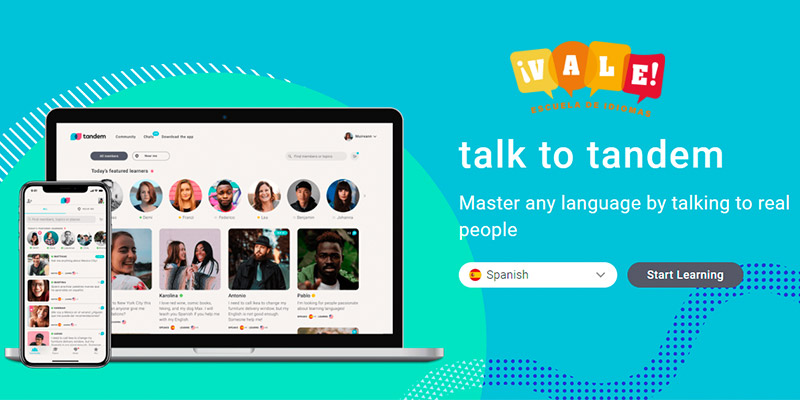
Are you planning a trip but don’t speak a word of Spanish? No problem, we will help you, or rather, Tandem will help you. Put your Spanish into practice with Tandem and improve day by day. We show you how:

First of all, you should know what Tandem is. It is an application created with the aim of connecting millions of people around the world so that they can share their languages and easily learn new languages.
Tandem is the best way to practice any language from wherever and whenever you want. Why? You have the opportunity to talk to thousands of native speakers from all over the world.
Using Tandem is like traveling while at home: you will meet new people, learn a lot of vocabulary, improve your pronunciation, as well as soak up many cultures.
Learn Spanish in a fun and enjoyable way. It doesn’t matter if you make mistakes, everyone does. Tandem users are right there willing to help you so that you can improve every day.
In short, put your Spanish into practice with Tandem because you can:
But that’s not all, because the best thing is that Tandem is free and you can use it immediately, we explain how:
| L | M | X | J | V | S | D |
|---|---|---|---|---|---|---|
| 1 | 2 | 3 | 4 | 5 | 6 | |
| 7 | 8 | 9 | 10 | 11 | 12 | 13 |
| 14 | 15 | 16 | 17 | 18 | 19 | 20 |
| 21 | 22 | 23 | 24 | 25 | 26 | 27 |
| 28 | 29 | 30 | ||||
Remember that if you need support with Spanish classes in our academy, we will be happy to help you. We offer courses in many languages for all levels and for all ages. You can attend in person or online, you choose!
One of the best ways to get started in a new language is to see content in it. Therefore, today we bring you a list of series to improve your Spanish. In addition to learning a lot, you will end up super hooked on them.
Due to its great worldwide success, it has been rated as one of the best Spanish series of 2019. It chronicles the life of Macarena, a young woman who unknowingly committed tax fraud and was sentenced to years in prison, where she and her family will embark on many adventures.
This series is recommended for B2 level students because of the vocabulary. As it happens in prison, the vocabulary used is very colloquial with words that you will never find in the dictionary…
If you’ve seen Orange is the New Black and liked it, this is your series. It is considered the Spanish version of it, but with less comedy.
Another of the series to improve your Spanish that you can not miss is La Casa de Papel, one of the most mythical series.
Its plot is a heist. Yes, as in many other series and movies. But in this case, it also has a plot twist. Instead of entering the bank, the thieves broke into Spain’s Fábrica Nacional de la Moneda y Timbre. That is, the building in charge of manufacturing banknotes and coins. You’ve probably heard of this Netflix series in Spanish as it has become known worldwide.
Apart from the plot, it has a quite complex vocabulary and some colloquial expressions.
If you like teen series, you can’t miss it. The story it´s about working-class teenagers attending a private Spanish school with very wealthy students, which leads, after several events, to a murder. It consists of 5 seasons that explore concepts and themes related to teen drama.
The dialogue in Spanish has a good rhythm and immerses you in the spoken language of teenagers. Many young people identify with their characters, which makes the series much easier to understand.
One of the best series to improve your Spanish if you are a student.
We can’t exclude comedy from this list. The plot of this series touches on the cultural differences within Spain and the dialect varieties in the country.
This entertaining comedy takes you through the relationship between Iñaki (from the north of Spain) and Carmen (from the south) and makes you have fun with their different stories.
The vocabulary of this series is very typical of Spain, the conversation is fast, but there are many historical and cultural references to help you get to know the country better.
A very enjoyable way to deepen the language by having a laugh with the characters of Allí Abajo.
We hope they are to your liking and you can take a look at them all.
These are some of the series to improve your Spanish that will make learning easier and more fun. You can explore platforms like Netflix and watch many others that are of interest to you. Spanish series or not, as long as you can see and hear them in this language, it will help you learn Spanish and to develop it even with dialects. It is also very helpful to watch Spanish series or films in Spanish with Spanish subtitles as well.
If you need reinforcements with your Spanish, we will be happy to help you. Tell us what you are looking for and at Vale Escuela de Idiomas we will contribute to make you achieve this with our great variety of classes, both face-to-face and online.
Do not forget to follow us on our social networks Instagram, Facebook and LinkedIn so as not to miss any news. We will help you improve your Spanish!
| L | M | X | J | V | S | D |
|---|---|---|---|---|---|---|
| 1 | 2 | 3 | 4 | 5 | 6 | |
| 7 | 8 | 9 | 10 | 11 | 12 | 13 |
| 14 | 15 | 16 | 17 | 18 | 19 | 20 |
| 21 | 22 | 23 | 24 | 25 | 26 | 27 |
| 28 | 29 | 30 | ||||
Para ofrecer las mejores experiencias, utilizamos tecnologías como las cookies para almacenar y/o acceder a la información del dispositivo. El consentimiento de estas tecnologías nos permitirá procesar datos como el comportamiento de navegación o las identificaciones únicas en este sitio. No consentir o retirar el consentimiento, puede afectar negativamente a ciertas características y funciones.
Puedes habilitar o deshabilitar las diferentes categorías de cookies utilizadas en este sitio web. Las cookies necesarias no se pueden desactivar, ya que garantizan el funcionamiento básico de la web.